Table of Contents
Breed
The popular believe that mixed races are healthier is empirically and statistically true, but my own experience is that they also can inherit all the bad stuff from the involved races.
A pure breed would then be the enemy I know. Also, not only health, but temperament and adult size are easier to predict for a puppy as well. Small breeds generally live longer than larger ones — typically reaching 16+ years compared to 10-13 years for medium/large breeds.
Key to longevity across all breeds: high-quality diet, regular exercise, healthy weight, routine veterinary care including wellness exams, vaccines, parasite prevention, and dental cleanings.
Current candidates:
- Papillon — highly trainable, excellent working memory, hardy and intelligent with no specific health concerns mentioned
- Jack Russell Terrier — smart and quick learners, but can be stubborn, generally healthy but retain high energy from their working heritage, requiring plenty of exercise and mental stimulation
- Miniature Pinscher — intelligent but independent-minded, active and playful, though they're not always tolerant of boisterous children
- Pomeranian — smart but often more willful and less eager to please, can be prone to heart disease, collapsing trachea, luxating patellas (loose kneecaps), and dental disease
All four are small breeds, and small dogs generally live longer than larger ones—typically reaching 16+ years compared to 10-13 years for medium/large breeds.
Info Links
- https://pangovet.com, click on Resource Center and enter race
Criteria to Select and Compare Breeds
- The dog must be suitable for air travel, meaning to be below maximum size and weight limits (6,5 kg, wither height 25 cm). This means only very small dogs are acceptable. It is probably the easiest to just select a breed from the generally accepted and published airline lists.
- It should have a lot of temperament and curiosity.
- Low or tameable hunting instinct (the is probably excluding a Jack Russel)
- It should not be aggressive or be easy to calm down.
- It should be easy to educate and entertain.
- It should be low maintainance regarding grooming, food and entertainment.
- Not too much shedding.
- Should be capable to stay alone for a few hours.
- It should be clever and intelligent.
- Great in social surroundings.
- A designated race makes air travel easier as certain races are listed as “cabin size” without further ado already during booking.
- Long life
- Not too small and fragile or being seen as prey
- No tail amputation
- Price
- History
- Size/Weight
- Physical Appearance
- Coat
- Life Span
- Intelligence
- Eye Sight
- Gender Differences
- Trainability
- Shedding
- Smelling
- Barking
- Jumping
- Licking
- Digging
- Space Needs
- Exercise Needs
- Left alone, separation anxiety
- Children/Family
- Maintainance
- Drooling tendedency
- Personality/Temperament
- Sleeping needs
- Food
- Illnesses
- Popularity and ease of acquiring
- Hunting drive
- Territorial/Protection/Guarding

Papillon


Named for their unique, wing-shaped ears that resemble the silhouette of a butterfly, this spunky little dog is a member of the toy group. Believed to be a native of France and Belgium, the Papillon can be found in works of Italian Renaissance art dating back to the 1500s and was a favored companion of noble families. Aside from their iconic, pointed ears that are further exaggerated by the long, wispy hair that grows around them, the Papillon is known for its distinct coat pattern and silky fur. Did you know that a Papillon with dropped ears is called a Phalène, which is the French word for moth?
Papillons have a withers height between 8”-11” (20-28 cm) and a weight in the range of 5-10 lb (2.3-4.5 kg). The Papillon has an overall body length of roughly 12”-17” (30-43 cm), standing height of 12”-16.5” (30-42 cm), and a typical lifespan of 14-16 years.
Jack Russel


- Height: 14”-17”, 36-43 cm
- Length: 18”-21,5“, 46-55 cm


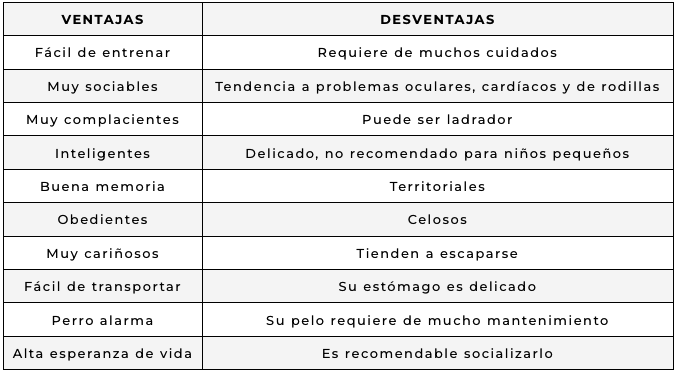
- A member of the toy group of dog breeds, the Pomeranian is a small dog ranging from three to seven pounds that is renowned for its iconic puffy coat. Named for the Polish-German region of Pomerania, this petite dog is believed to be a descendent from either the Spitz or the Samoyed and was not widely popularized until its introduction to England after finding its way into the royal family during Queen Victoria’s reign. This spunky, fluffy pooch comes in a variety of colors and requires daily brushing to maintain its luxurious coat. Did you know that two Pomeranians together are called a puff? The size and Weight of Pomeranians make them ideally suited for air travel. Pomeranians have a withers height between 6”-7” (15-18 cm) and a weight in the range of 3-7 lb (1.4-3.2 kg). The Pomeranian has an overall body length of roughly 9.5”-11” (24-28 cm), standing height of 8”-9.5” (20-24 cm), and a typical lifespan of 12-16 years. Rem. T.: They have probably no cut tails. The thick fur make them ideally suited for outdoor activities, hiking, motorcycle, biycle, kayak, camping. Der Zwergspitz ist eine aus Deutschland stammende Hunderasse. Sie wird der FCI-Gruppe 5, der Gruppe der Spitze und Hunde vom Urtyp, sowie der Sektion 4, der Sektion der Europäischen Spitze, zugeordnet. Der Zwergspitz ist auch als Pomeranian bekannt und wird außerdem der Rasse der Deutschen Spitze untergeordnet. Er wird häufig auch als Kleinspitz bezeichnet, obwohl die beiden Hunde unterschiedliche Varietäten des Deutschen Spitz verkörpern und heute getrennt voneinander gezüchtet werden.
Er wird durch die FCI als Hund ohne Arbeitsprüfung deklariert und ist im Verzeichnis der Federation unter der Standardnummer 97 zu finden. Der kleine, fröhliche Hund ist auf der Liste der Haushunde zu finden. - Herkunft
- Die Spitze gehören heute zu den seltensten Hunderassen der Welt: Sie sind vom Aussterben bedroht. Und das ist schade.
Ausgesprochen schade. Denn sie gehören, so wie sie heute noch aussehen, mit Sicherheit auch zu den ältesten Hunderassen der Welt. Üblicherweise sagt man, die ältesten Spitze seien jene „Torfhunde“, die man in den 6.000 Jahre alten Pfahlbausiedlungen am Bodensee fand. Aber man fand auch Spitz-ähnliche Hunde in 8.000 Jahre alten Ausgrabungen in Dänemark und England. Und man fand 10.000 Jahre alte Hundegräber in Japan, in denen, sorgsam mit Muschelnbedeckt, kleine, Spitz-ähnliche Hunde bestattet waren. Man fand und findet Spitz-ähnliche Hunde in Skandinavien, Holland, Deutschland, im antiken Griechenland, im AltenÄgypten. Aber man fand und findet sie auch in Südostasien: als Batak-Spitz bei den Pfahlbauern im Norden Sumatras, als Tenggerhund in den Gebirgen Javas, als Chow Chow in Südchina, als „Autochthone Japanische Spitze“ in unterscheidbaren Rassen und Größen auf den Inseln Japans. Der Spitz ist eine der wirklich klassischen Hunderassen in Deutschland und ganz Mitteleuropa. Spitze gehörten über viele Jahrhunderte auf jedes Anwesen, bewachten Warenlager und Transportkarren. Im Süden traten anstelle der Spitze oft die Pinscher und Schnauzer. Bei größeren Anwesen waren es meist Molosser oder andere größere Hunde, die auf das Hab und Gut ihrer Herren aufpassten. Man findet bereits bei den alten Römern und Griechen Abbildungen von Hunden, die eine erstaunliche Ähnlichkeit mit den Spitzen haben, wie wir sie heute kennen. Die moderne Rassehundezucht nahm sich schon früh der Spitze an. Der Verein für Deutsche Spitze, der diese Hunde noch heute im VDH vertritt, wurde bereits 1899 gegründet. Er ist zugleich verantwortlich für den weltweit gültigen Rassestandard der Deutschen Spitze. - Nach und nach wurden die Spitze in 5 Varietäten nach Größe geordnet: Wolfsspitz, Großspitz, Mittelspitz, Kleinspitz, Zwergspitz oder Pomeranian. Als Standard Spitz gilt der Mittelspitz. Glücklicherweise haben die Spitze ihren Charakter bewahren können. Es sind ausgesprochen clevere, wachsame und standorttreue Hunde. Im Mittelalter bis in die Neuzeit hinein war die Jagd das Vorrecht des Adels. Der duldete nicht, wenn die Hunde der einfachen Bauern oder Bürger mal ein Kaninchen rissen oder sogar bei der Wilderei half. Teils gab es drakonische Strafen, um die Hunde der einfachen Leute an der Jagd zu hindern. Zudem ist es für einen Wachhund immer besser, wenn er vor Ort bleibt und zuverlässig seiner Aufgabe nachgeht. So wurde über etliche Jahrhunderte der Jagdinstinkt in den Spitzen herausgezüchtet. Allerdings blieben sie auf ihrem Hof noch immer ein effektiver Vertilger von Mäusen und Ratten. Mit dem Ende der kleinbäuerlichen Landwirtschaft, dem Aussterben der Pferdefuhrwerke und dem Verlust der alten Arbeitersiedlungen ging auch das klassische Arbeitsfeld der Spitze verloren. Spitze wurden selbst in ihrem Stammland eine seltene Erscheinung. Am beliebtesten blieben die ganz kleinen Spitze wie Kleinspitz oder Pomeranian. Der Mittelspitz hingegen bringt es im VDH gerade einmal auf 100 Welpen pro Jahr, der Großspitz hat noch weniger. Seit 2003 wurden der Groß- und Mittelspitz daher von der „Gesellschaft zur Erhaltung alter und gefährdeter Haustierrassen“ zu einer vom Aussterben bedrohten Haustierrasse erklärt. Der Großspitz wird als extrem gefährdet, der Mittelspitz als stark gefährdet eingestuft. Doch scheinen sich die Hundefreunde langsam wieder der Qualitäten dieser tollen Hunde zu erinnern. Spitze sind äußerst gelehrige und leicht führbare Begleiter, die sich überall bestens einpassen. Sie eignen sich hervorragend als Begleit- und Familienhund in unserer hektischen Zeit. Zudem sind sie – vom Zwergspitz abgesehen – kaum durch Fehlentwicklungen der Hundezucht belastet.
- Es lohnt sich für jeden Hundefreund, einen Blick auf den Spitz zu werfen zumal es ihn in allen Größen gibt.
Unsere Spitze gehören alsozu einem weltweiten Ur-Typder überall dort heimisch war und ist, wo Menschen auf beengtem Raum und nah am Wasser lebten, dort, wo Menschen einen zuverlässigen Helfer brauchten, der sich gerne in diese engen Verhältnisse einpasste, der sich mit allen Gruppenmitgliedern vertrug, deraber doch gleichzeitig kompromisslos die Vorräte „seiner“ Menschen gegen gruppenfremde, zwei- oder vierbeinige Räuber und Mitesser verteidigte. Und aus diesem engen Miteinander entstand dann jener Ur-Typ von Hund, den unsere Spitze hierzulande noch so deutlich verkörpern: Spitze sind kleine bis mittelgroße Hunde im wetterfesten, dichten Haarkleid, die ihre lan-
ge, buschige Rute „platzsparend“ über den Rücken gerolltragen. Sie sind „quadratisch – praktisch – gut“ gebaut und eher feingliedrig. Sie haben kräftige, gerade stehende Beine, die ihrem Gang zwar etwaseigenartig Staksiges geben, die sich aber prächtig zum Klettern und Stiegensteigen eignen. Und alle zeigen uns ein „spitzes“, fuchsähnliches Gesichtmit immer wachen Augen und immer gespitzten Ohren, denen nicht die kleinste Bewegung, das leiseste Geräuschentgeht. Alle Spitze, die deutschen genauso wie die fernöstlichen, sind exzellente Wächter, reviertreu und Fremden gegenüber erst einmal misstrauisch. Und genau diese Eigenschaft unterscheidet sie von ihren nördlichen „Brüdern“, den Nordischen Jagd- und Schlittenhunden, die häufig genug noch wie große, etwas zu lang geratene Spitze aussehen.
Aber: „Echte“ Nordische Hunde, an die menschenleeren Weiten der Tundra angepasst, sind keine „Hauswächter“. Ihnen ist jede menschliche Gesellschaft recht … Hauptsache, sie verspricht Bewegung und eine spannende, erfolgreiche Jagd. Doch es gibt auch bei den Nordischen Hunden Unterschiede, Abstufungen. Es gibt Nordische, die zwar ausgesprochen menschenfreundlich sind, aber keine begeisterten
Jäger. - Es gibt Nordische, die
lieber wachen als jagen. Und
dann gibt es die sog. Japani-
schen „Spitze“, die sind so-
wohl im Wachen wie im Jagen
Weltmeister … Die Deutschen Spitze aber sind
bis heute „echte“ Spitze: Sie
sind unbestechliche Wächter,
die genau zwischen „Kenn-
ich“ und „Will-ich-gar-nicht-
kennen-lernen“ unterscheiden.
Und sie sind ausgesprochen
„haustreu“. Sie sind – wenn sie
Zeit haben und dürfen – erfolg-
reiche Revierbummler und Ab-
stauber. Etwas finden, das ist
ihnen viel lieber, als etwas erst
einmal suchen und dann auch
noch kilometerweit hetzen. An
weiten Expeditionen ins Unbe-
kannte sind sie deshalb eher
wenig interessiert: Und das
Ver-Jagen ist ihnen immer
wichtiger als das Er-Jagen.
Bis zur Zeit von Wilhelm
Busch (1832–1908) war „der
Spitz“ in Mitteleuropa noch
„der Hund an sich“ und teilte
sich dieses Areal mit seinen
kurz- bis rauhaarigen „Brü-
dern“, den Pinschern und
Schnauzern. Spitze bewachten
alle Häuser und Höfe im
Nordwesten (einschließlich
Holland und Belgien), Schnau-
zer-Pinscher den Südosten
(mitsamt Österreich). Und der
einzige Unterschied, den es –
neben der Klima-angepassten
Felllänge – zwischen diesen
beiden „Brüdern“ bis heute
noch gibt, ist: Die nordwestli-
chen Spitze brachten auch
das nordisch-unterkühlte Tem-
perament mit, passend zu
ihren temperamentmäßig et-
was „ruhigeren“ Leuten: Spit-
ze sind auch heute noch gelassener“, „ruhiger“ als
Pinscher-Schnauzer …
„Köter“ nannte man sie alle
beide. Und das war überhaupt
nicht abfällig gemeint, be-
wachte ein „Köter“ damals
doch die „Kate“ des Kleinbau-
ern genauso zuverlässig, wie
ein großer „Hofwart“ den Hof
des Großbauern bewachte.
„Mistbeller“ nannte man sie,
weil sie so gerne auf strategisch
wichtigen Aussichtspunkten
standen, von denen aus sie alles
übersahen und dann „Alarm“
gaben. Weshalb sie auch als
Beifahrer auf den Pferdefuhr-
werken sehr beliebt waren:
Hoch oben auf dem Kutsch-
bock hatten sie alles im Blick,
und wenn der „Fahrer“ unter-
wegs mal eindöste, dann über-
nahm sein „Beifahrer“ die Ver-
antwortung und meldete dem
Eingedösten jede Verände-
rung, jede vermeintliche Ge-
fahr. Und so mancher von
ihnen machte auch als Binnen-
schiffer Karriere: Als nimmer-
müder Ausguck-Mann stand
er im Bug des Kahns und mel-
dete jede Untiefe, jeden daher
treibenden Baumstamm.
Ihre Hauptaufgabe aber war
überall dieselbe: aufpassen,
spähen, spitzeln, spionieren
und Bescheid sagen … Weshalb
die „Spitzbuben“ der Welt
auch die „Spitzhunde“ nie
leiden konnten … Die Deutschen Spitze waren
seit dem Mittelalter die Hunde
der Kleinbauern und der Klein-
bürger. Die Großbauern hiel-
ten sich große Bauernhunde als
Hof- und Vieh-Wächter. Die
Großbürger machten es wie die
Großbauern oder eiferten dem
Adel nach. Der Adel aber hielt
sich edle Jagdhunde. Die Jagd
war nämlich ein Privileg des
Adels, und Bauern- oder Kät-
nerhunde hatten sich nicht ein-
zumischen, wenn die Wilde
Jagd vorbeizog. So mancher dickköpfige Bauernhund
bezahlte solche Einmischung
mit dem Leben. Die Spitze
nicht: Die blieben und sagten
Bescheid, wenn die Luft wieder
rein war …
Nur einmal (1781) machte
ein Spitz Schlagzeilen. Der
holländische Republikaner de
Gyselaer, den man „Kees“
nannte, hatte als ständigen Be-
gleiter und „Markenzeichen“
immer einen Wolfspitz neben
sich. Doch die Rebellion des
„Kees“ scheiterte, und der
„Kees-Hund“ geriet wieder in
Vergessenheit. Und als dann 10
Jahre und 50 Jahre später die
Menschen in Europa wirklich
an den Thronen rüttelten und
ihre Bürgerrechte durchsetzten
… da hatten die Bürger hierzu-
lande nichts Wichtigeres zu
tun, als es den Adligen – endlich, endlich – nachzumachen:
Sie kauften sich „edle Jagd-
hunde“, und am allerliebsten
die neuesten, ausgefallensten
Zuchtrassen aus England …
Nur einmal noch kamen
die Spitze wieder „in Mode“:
In den unruhigen Nachkriegs-
und „Wirtschaftswunder“-Zei-
ten, als es plötzlich wieder all-
überall „Spitzbuben“ gab, da
waren die „Spitzhunde“ plötz-
lich wieder gefragt. Aber nur kurzfristig: 2003 erklärte die
Gesellschaft zur Erhaltung
alter und gefährdeter Haus-
tierrassen die Deutschen Spit-
ze zur „gefährdeten Nutztier-
rasse des Jahres“, und die ge-
fährdetsten, wohl kaum noch
zu rettenden sind die, die ein-
mal die häufigsten, die „nor-
malen“ waren: der Großspitz
und der Mittelspitz …
Nun wäre es ja eigentlich
kein „Drama“, wenn von den heute fast 400 internatio-
nal anerkannten Hunderassen
fünf aussterben.
Aber hier steht heute der ge-
samte Gen-Pool eines uralten
Urtyps auf der Kippe. Die Ja-
paner haben ihre so genannten
„Spitze“ zum Nationalerbe er-
klärt und hegen und pflegen sie
planmäßig … Irgendso etwas
muss uns auch einfallen, ehe es
endgültig zu spät ist …
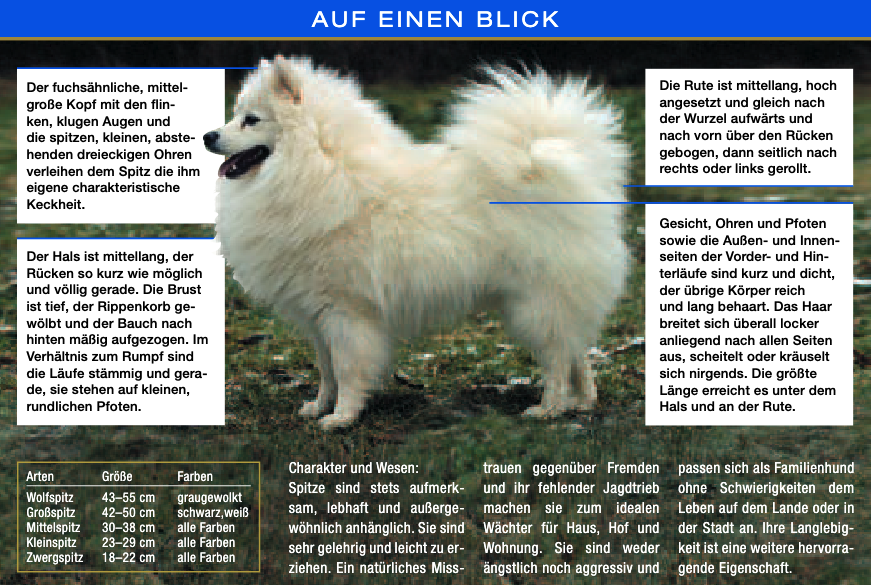
 Als Spitze werden eine Reihe von Hunderassen bezeichnet, welche in der FCI-Systematik in der Gruppe 5 in den Sektionen 4 und 5 geführt werden. Dabei wird zwischen europäischen Spitzen (Sektion 4) und asiatischen Spitzen (Sektion 5) unterschieden. Eine nähere genetische Verwandtschaft zwischen europäischen und asiatischen Spitzen besteht – abgesehen vom Eurasier und dem Japan-Spitz – nicht. Mitteleuropäische Spitze waren (und sind teils noch) Wachhunde oder Hütehunde und zeigen meist kein ausgeprägtes Jagdverhalten. Die Nordischen Hunde, die in FCI-Sektion 2 der Gruppe 5 geführt werden, sind im Gegensatz dazu Jagdhunde. Sie sind also vom Typ her Spitz, nicht aber vom Verhalten her. Dennoch werden diese Hunde auch als Nordische Spitze bezeichnet und gehören auch zur FCI-Gruppe der Spitze und Hunde vom Urtyp. Geprägt durch das enge Miteinander von Menschen und Hunden, von Ur-Spitzen, bildeten sich die wichtigen Charaktereigenschaften und das Aussehen unserer heutigen Spitze über die Jahrtausende heraus. Nur durch Pfiffigkeit konnten sie ihren Aufgaben - dem Wachen und Bewachen - nachkommen. Auf Grund der räumlichen Enge kamen nur kleine bis mittelgroße Hunde für diese Aufgabe bei den beengten Platzverhältnissen der Vergangenheit in Betracht. Genau dem entsprach der Spitz mit seinem quadratischen Körperbau. Er war quadratisch, praktisch - gut! Bis zum Ende des 19. Jahrhunderts waren die Spitze in Zentraleuropa zusammen mit den Pinschern und Schnauzern noch DIE Hunderassen schlechthin. Auch die heute eher abfällig gebrauchte Bezeichnung “Köter” stammte aus dieser Zeit und verwies auf nichts andres als die “Kate” in der der Spitz zuhause war. Die Deutschen Spitze aber sind bis heute “echte” Spitze: Sie sind unbestechliche Wächter, die genau zwischen “Kenn-ich” und “Will-ich-gar-nicht-kennen-lernen” unterscheiden. Und sie sind ausgesprochen “haustreu”. Sie sind – wenn sie Zeit haben und dürfen – erfolgreiche Revierbummler und Abstauber. Etwas finden, das ist ihnen viel lieber, als etwas erst einmal suchen und dann auch noch kilometerweit hetzen. An weiten Expeditionen ins Unbekannte sind sie deshalb eher wenig interessiert: Und das Ver-Jagen ist ihnen immer wichtiger als das Er-Jagen. Deutsche Spitze sind Nachkommen des steinzeitlichen Torfhundes « Canis familiaris palustris Rüthimeyer » und späteren « Pfahlbauspitzes » und die älteste Hunderasse Mitteleuropas. Zahlreiche andere Rassen sind aus ihnen hervorgegangen. Der Torfhund, auch Torfspitz (Canis palustris, Canis familiaris palustris Rütimeyer), war ein prähistorischerHaushund. Er wurde 1861 vom Schweizer Zoologen Ludwig Rütimeyer erstmals beschrieben, nach Funden in Schweizer Pfahlbausiedlungen der Jungsteinzeit (daher auch Pfahlbautenspitz). Der Hund hat gemäß der Erstbeschreibung ein Aussehen ähnlich dem rezenten Wolfsspitz. Deswegen wurde einige Jahrzehnte lang vermutet, dass er der direkte Ahnherr aller nordischen Hunde, der Deutschen Spitze und über verschiedene Stufen auch anderer Hunderassen sei. Diese Urrassen-Theorie geht auf den KynologenTheophil Studer zurück und ist heute überholt. Die Schädellänge des Torfhundes war mit 135–150 mm bereits deutlich kleiner als die eines Wolfschädels. Einige Funde von Torfhunden, deren Schädel Spuren eines gewaltsamen Todes aufweisen, lassen auf eine frühe Zuchtwahl schließen, da angenommen werden kann, dass nicht der ganze Wurf aufgezogen wurde, sondern nur einzelne Individuen. Es wird vermutet, dass er (zumindest am Anfang) ähnlich lebte wie die Pariahunde heute, also am Rande der Siedlungen, in großen Teilen Selbstversorger. Er begleitete wahrscheinlich die Menschen bei ihren Jagden, bewachte Häuser und Siedlungen und zog im hohen Norden vielleicht auch ihre Lasten. In Siedlungen der Urgeschichte wurden immer wieder Knochen dieses Hundetyps gefunden, mit einem Schwerpunkt in der Jungsteinzeit und Bronzezeit. Die Funde erstrecken sich über ganz Europa bis hin nach Asien und Nordafrika. Die Beschreibung als eigenständige Rasse bzw. Unterart geht auf Funde in Pfahlbausiedlungen am Bielersee (Fundplatz im Weiler Schafis) zurück. Schon um 1880 wurden auch Funde vom Dümmer und den Watten im Oldenburger Land bekannt und dem Torfspitz zugerechnet. In der bandkeramischen Siedlung von Zschernitz in Sachsen wurde im Jahre 2003 ein vollständig erhaltener Torfhund geborgen. Das bei seinem Tode etwa zwei Jahre alte Tier wurde zusammen mit einem toten Welpen in einer Erdgrube bestattet. Der Hund von Zschernitz hatte eine Schulterhöhe von etwa 45 cm, was mit der Größe des heutigen Spitzes verglichen wird. Ein nahezu vollständig erhaltenes Exemplar wurde 1953 mit dem Torfhund von Burlage in einem niedersächsischen Moor gefunden. Es wurde lange Zeit als bronzezeitlich vermutet. Neuen Radiokohlenstoffdatierungen zufolge starb dieser Hund jedoch erst in der Neuzeit, zwischen 1477 und 1611. Im nicht deutschsprachigen Ausland werden die Wolfspitze auch Keeshond und die Zwergspitze Pomeranian genannt. Seinen Ursprung hat der Zwergspitz in großen Arbeitshunden aus arktischen Regionen. Der Zwergspitz entwickelte sich letztendlich aus seinem engen Verwandten, dem Kleinspitz. Der Kleinspitz wurde im 18. Jahrhundert von Pommern nach England importiert. Dort wurde die Zucht des Kleinspitz verändert und die Hunde entwickelten sich weiter. Die sich entwickelnde Rasse wurde immer keiner und feingliederiger und erhielt schließlich den Namen Pomeranian. Die Namensgebung dürfte vermutlich aufgrund der Herkunft des Kleinspitz aus dem deutschen Pommern erfolgt sein. Der Pom, wie der Pomeranian auch gerne genannt wird, wurde im englischen Adelshaus gerne gehalten und ist auf vielen Gemälden aus den britischen Adelshäusern zu sehen. 1767 wurde ein Hundepärchen dieser Rasse an Lord Haarcourt durch die englische Königin Charlotte verschenkt. In den Siebzigerjahren fand der Pom seinen Rückweg nach Deutschland und wird seitdem auch im deutschsprachigen Raum gerne gezüchtet und gehalten. In Deutschland ist der Pomeranian auch heute noch als Zwergspitz bekannt. Der Zwergspitz wurde als Varietät des Deutschen Spitz 1957 durch die FCI offiziell anerkannt und 2019 wurde der letztgültige Standard festgelegt und veröffentlicht. ==== Charakter ==== Gelehrig, Klug, Vielseitig, Aufmerksam, Unbestehlich, Anhänglich, Erziehbar.
Den kleinen Zwergspitz scheint seine geringe Körpergröße nicht zu stören. Er besitzt ein selbstbewusstes und aufmerksames Wesen und blickt stolz und frech in die Welt. Auch größeren Artgenossen gegenüber sind die kleinen Hunde selbstbewusst und wirken gar arrogant. Der Zwergspitz neigt dabei oftmals zur Selbstüberschätzung. Doch trotz ihres frechen und charmanten Charakters kennt der Pomeranian keine Aggression oder Nervosität. Der Pom gilt als eine sehr vielseitige und freundliche Hunderasse. Er verträgt sich gut mit Artgenossen, auch wenn er bisweilen Arroganz ausstrahlt. Der Zwergspitz kann alleine oder mit anderen Haustieren gehalten werden. In seinem familiären Umfeld zeigt er sich hingegen sozial und freundlich. Er eignet sich gut als Familienhund, da er sehr gesellig, offen und liebevoll ist. Dennoch benötigt der kleine Spitz unbedingt eine Bezugsperson, die ihm die Richtung weist und ihm Halt gibt. Denn als anhängliche Hunderasse ist der Pomeranian bekannt für sein treues Wesen und seine Zuneigung. Er begleitet seinen Besitzer gerne überall hin und erlebt mit ihm Abenteuer. Zwar ist der Jagdtrieb des kleinen Hundes kaum ausgeprägt, doch er verteidigt sein Eigentum und seine Familie mit Scharfsinnigkeit. Nachbarn sollten am besten nicht hellhörig sein und etwaiges Bellen tolerieren. Fremden gegenüber ist der Zwergspitz allerdings sehr misstrauisch und reserviert. ==== Aussehen ==== Langes, abstehendes Deckhaar und kurze, dicke, wattige Unterwolle
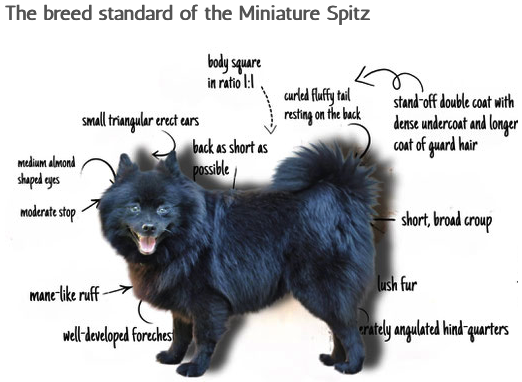
Das Aussehen des Pomeranian wird maßgeblich von seiner Körpergröße definiert. Mit einem Stockmaß von 18 bis 22 cm und einem Gewicht von maximal 3,5 kg ist der Pom leichter als viele Katzen. Sein tatsächlicher Körperbau wird durch das viele Fell verdeckt. Die kleinen Hunden besitzen eigentlich einen schlanken und sportlichen Körperbau, mit zierliche Läufen und schmaler Taille. Das Haarkleid ist dicht und lang und verlieht den Hunden ein flauschiges Erscheinungsbild. Der Pom ist bekannt für sein weiches, abstehendes Fell mit dicker Unterwolle. Ein Pomeranian kann die Farben Weiß, Sand, Creme oder Schwarz annehmen. Manche Hunde sind auch mehrfarbig gescheckt oder weisen Farbkombinationen auf. Häufig ist das Fell im Gesicht und um das Maul dunkler, als der Rest des Körpers. Der Zwergspitz hat einen harmonischen Körperbau in quadratischem Format mit einem kleineren fuchsartigen Kopf. Charakteristisch für den Zwergspitz ist der Kragen, der das Gesicht wie eine Löwenmähne umschließt und die behaarten Hosen an den Hinterläufen. Im Gesicht des Hundes stechen besonders die dunklen mandelförmigen Augen hervor. Im Blick des Pom spiegelt sich sein wachsames Gemüt wider. Die fuchsähnliche Schnauze ist feingliedrig und meist dunkler als der Rest des Körpers. Die Ohren dieser Rasse stehen eng beieinander und aufrecht. Markant ist auch der gerade Rücken übergehend in die kräftige Lendenpartie. Die Rute ist buschig und über dem Rücken geringelt. Je nach Hund liegt sie meist fest auf dem Rücken auf und der Rutenansatz ist verhältnismäßig kräftig. ==== Erziehung & Haltung ==== Die Erziehung des Zwergspitz gestaltet sich recht unkompliziert. Die kleinen Hunde sind sehr auf ihren Menschen fixiert und besitzen eine treues und aufmerksames Wesen. Meist findet der Pom Spaß an der Arbeit mit seinem Herrchen oder Frauchen und lernt schnell. Da von Zeit zu Zeit das freche und charmante Gemüt des kleinen Hundes überwiegt, sollte die Erziehung mit genügend Geduld und Konsequenz erfolgen. Es sollte bereits im Welpenalter klar sein, wer das Sagen hat. Der Pom ist durchaus unterordnungsbereit und erkennt schnell die Hierarchie im Rudel. Zwar besitzen die kleinen Hunde ihren Stolz und testen gerne ihre Grenzen aus, doch einmal in die Schranken gewiesen, lernt der Pom schnell wo sein Platz ist. Auch wichtig bei der Erziehung eines Zwergspitz ist, dass dem kleinen Hund das Kläffen von Anfang an abgewöhnt wird. Die deutschen Hunde besitzen eine überraschend lautes Organ und sie setzen es ebenso gerne und lauthals ein. Außerdem ist es essenziell, den Pom schon im Welpenalter an das Alleinebleiben zu gewöhnen. Durch seine enge Bindung zu seinem Besitzer und durch sein soziales Wesen bleibt der Pomeranian nur ungerne alleine, kann jedoch durch etwas Übung problemlos drei bis vier Stunden alleine gelassen werden. Die Haltung des Pom gestaltet sich, ebenso wie die Erziehung, durchaus unkompliziert. Die kleinen Hunde können sowohl in einer kleinen Wohnung in der Stadt als auch in einem großen Haus auf dem Land gehalten werden. Durch ihre geringe Größe und ihr soziales und unerschrockenes Wesen fühlen sie sich sowohl in städtischen Gebieten als auch in ruhigeren Vororten oder am Land sehr wohl. Für den Pom ist es am wichtigsten, dass er eine vertrauensvolle Bindung zu seinem Besitzer aufbauen kann und viel beschäftigt wird. Der Zwergspitz ist ein kleiner Abenteurer, der gerne die Welt entdeckt. Jedoch genießt er ebenso Kuschelabende auf dem Sofa und ruhige Sonntage mit der Familie. ==== Ernährung ==== Bei der Ernährung des Zwergspitz sollte darauf geachtet werden, dass mehrere kleine Mahlzeiten über den Tag verteilt gefüttert werden, anstatt einer großen Mahlzeit. Aufgrund ihrer geringen Körpergröße ist auch das Magenvolumen der Hunde schnell ausgeschöpft. Um Magendrehungen oder Ähnliches zu vermeiden, sollte der Pom zwei- bis dreimal täglich gefüttert werden. Wenn eine Mischung aus Trocken- und Nassfutter gefüttert wird, sollte bei der Wahl des Trockenfutters darauf geachtet werden, dass die Krokettengröße für kleine Hunde geeignet ist. Meist findet man in der Tierhandlung oder in Futterhäusern Spezialfutter für kleine Hunderassen, bei dem die Größe der Kroketten auf die Kiefergröße des Hundes angepasst ist. ==== Gesundheit & Lebenserwartung ==== Der Zwergspitz ist sehr robust und hat Krankheiten gegenüber eine sehr gute Widerstandskraft. Ein Besuch beim Tierarzt ist in der Regel nur notwendig, wenn die nächste Impfung oder die Zahnkontrolle ansteht. Ein gesunder Zwergspitz erreicht ein Alter von 12 bis 16 Jahren. Doch leider ist der Pomeranian, wie viele seiner Verwandten, von erblich bedingten Krankheiten betroffen. Die selektierte Zucht und die Miniaturgröße des Pom bringen erhebliche Nachteile mit sich. Der kleine Hund leidet häufig an Knieproblemen, wie beispielsweise Fehlstellungen der Kniescheiben oder Ähnliches. Außerdem besitzt der Zwergspitz eine genetische Disposition für diverse Atem- und Herzerkrankungen. Manche Hunde dieser Rasse erleiden auch einen sogenannten Trachealkollaps, bei dem es zu einem Zusammenklappen der Luftröhre kommt und so ein teilweiser Verschluss der Atemwege erfolgt. Dies ist zurückzuführen auf eine vermutlich vererbbare Knorpelschwäche, auch als Chondromalazie bekannt, die die tracheale Membran sowie die Luftröhrenknorpel betrifft. Diese Gewebe funktionieren so nur geschwächt, wodurch es zu einem akuten Trachealkollaps kommen kann. Im Sommer ist es besonders wichtig, dem Pom immer genügend Wasser und ein schattiges Plätzchen zur Verfügung zu stellen. Die dicke Unterwolle kann dem Zwergspitz an heißen Tagen durchaus zu schaffen machen. Um dem Pomeranian die heißen Sommertage so angenehm wie möglich zu gestalten, sollte ihm immer ein schattiger Rückzugsort geboten werden. Spaziergänge in der Mittagshitze sollten auf eine minimale Dauer reduziert oder vermieden werden. ==== Kosten ==== Ein Zwergspitz kostet bei einem professionellen Züchter mindestens 1.000 €. (Quelle: edogs) Preise die darunter liegen sollten mit Misstrauen hinterfragt werden. ==== Pflege ==== Regelmäßiges Bürsten sollte ein fixer Bestandteil der Pflege-Routine eines Pomeranian sein. Es ist sinnvoll den Hund schon im Welpenalter an den Kamm oder die Bürste zu gewöhnen. Am besten sollte die Fellpflege täglich oder alle zwei Tage stattfinden, um das Fell regelmäßig zu reinigen und es von etwaigen Fremdkörpern zu befreien. Das Bürsten stärkt außerdem die Bindung zwischen Hund und Besitzer. Da Poms generell sehr anhängliche und treue Weggefährten sind, genießen sie die Fellpflege meist sehr. Zur Pflege-Routine sollte außerdem die regelmäßige Kontrolle von Schleimhäuten, Atemwegen, Augen und dem Genitalbereich zählen. Überschüssige Sekrete können mit einem milden Feuchttuch entfernt werden, ebenso Fremdkörper und Schmutz. Auch zwischen den Pfotenballen können sich Fremdkörper verfangen. Nach Spaziergängen sollten die Ballen hin und wieder auf etwaige Fremdkörper untersucht werden, damit es zu keinen Entzündungen der Pfoten kommt. ==== Alleine lassen ==== Ein Zwergspitz sollte nicht länger als drei bis vier Stunden alleine gelassen werden. Bei viel Übung und ausreichender Beschäftigung kann ein Pomeranian auch bis zu fünf Stunden alleine gelassen werden. ==== Aktivitäten & Training ==== Der Zwergspitz ist eine sehr aktive Hunderasse, die gerne neue Abenteuer erlebt. Aufgrund seiner geringen Körpergröße ist dem Pomeranian das Entdecken der Welt allerdings nur eingeschränkt möglich. Fahrradtouren, lange Wanderungen oder die Begleitung zu Pferd fallen nicht in den Möglichkeitsbereich des kleinen Hundes. Trotzdem ist es wichtig den Hund körperlich wie auch geistig, genügend auszulasten und ihm Abwechslung zu bieten. Der Pomeranian besitzt einen verspielten Charakter und findet Freude an Geschicklichkeits- und Intelligenzspielen.
Im Training tritt der Pomeranian aufmerksam und interessiert auf. Er lernt schnell und hat Spaß an der gemeinsamen Arbeit mit seinem Besitzer. Der Zwergspitz besitzt eine hohe Auffassungsgabe, testet durch sein freches Gemüt aber gerne seine Grenzen aus. Konsequenz und Geduld sind essentiell, wenn mit dem Zwergspitz trainiert wird. Der Pomeranian eignet sich hervorragend für das sogenannte Clicker-Training. Bei dieser Art des Trainings wird der Hund durch das Klickern eines Clickers und einer Belohnung belohnt. Somit verbindet der Hund nach einer Zeit das Klickern mit einem positiven Ereignis und sieht das reine Klickern als Belohnung an. Die kleinen Hunde lernen sehr gerne Tricks und werden gerne im DogDancing verwendet. ==== Besonderheiten ==== Der Zwergspitz ist vor allem für seine geringe Körpergröße und sein Fliegengewicht bekannt. Er zählt zu den kleinsten Hunderassen der Welt und verzaubert außerdem durch sein flauschiges Aussehen. Im deutschsprachigen Raum ist der Pomeranian vor allem durch den YouTube-Star DagiBee geworden. Die YouTuberin besitzt einen Zwergspitz namens Zula, der unter anderem in vieler ihrer Videos zu sehen ist. ==== Auslauf ==== Durch seine geringe Größe benötigt der Zwergspitz im Vergleich zu anderen Hunderassen relativ wenig Auslauf. Im Durchschnitt sollte mit dem Hund eine Stunde pro Tag spazieren gegangen werden. ==== Nachteile ==== Aufgrund seiner geringen Größe ist der Zwergspitz nur eingeschränkt für Aktivitäten geeignet. Wer sich einen Hund wünscht, der auf Radtouren oder zu Pferd begleitet, der ist mit dem Pom nicht besonders gut beraten. Auch das Ausüben verschiedenster Hundesportarten ist mit dem Zwergspitz meist nicht möglich. Die Vorbelastung durch diverse erblich bedingte Krankheiten können ebenfalls ein Problem darstellen. ==== Eignung ==== Der Pomeranian ist sowohl für Anfänger als auch erfahrene Hundehalter geeignet. Er zählt zu den pflegeleichten und leicht erziehbaren Rassen und die Haltung des kleinen Hundes ist weitgehend unkompliziert. Trotzdem sollte die Erziehung des Poms mit Konsequenz, Geduld und einer liebevollen Art erfolgen. Der Pomeranian kann sowohl in einer großen Familie als auch in einem Single-Haushalt gehalten werden. Jedoch sollte darauf geachtet werden, dass der kleine Hund viel Gesellschaft bekommt und wenig alleine gelassen wird. Der Zwergspitz braucht durch sein soziales und freundliches Wesen viel Beschäftigung und Sozialkontakt, weshalb er sich in einer Familie am wohlsten fühlt. Auch Kindern gegenüber verhält sich der Zwergspitz freundlich, aufgeschlossen und liebenswert. Sein verspieltes und aufgewecktes Wesen macht den Hund zum perfekten Spielgefährten für die Kleinsten des Haushalts. Trotzdem ist es wichtig, dass der Pomeranian eine Bezugsperson hat, die ihn führt und ihm Sicherheit vermittelt. Der Zwergspitz kann auch von Senioren gehalten werden. :0a058afe85cbcff218cfe176c1a02ec8.png ===== ===== ===== Miniature Fox Terrier ===== :b4a8d0dbfd5cc8a4e02ad0b490e86a7c.png * Not recognized by the AKC and the FCI. The Miniature Fox Terrier, or Mini Foxie, is a unique breed from Australia, where they were developed as a hunting breed and vermin router. This pup is fast, agile, and fearless, and their small size makes them well-suited for apartments and small homes. They’re also popular due to their low grooming requirements, as their short fur doesn’t shed much. They are different from but similar in appearance to (and often confused with) the Toy Fox Terrier from the United States. ===== :7c5e3c8729495297164fbfd79c50524d.png History =====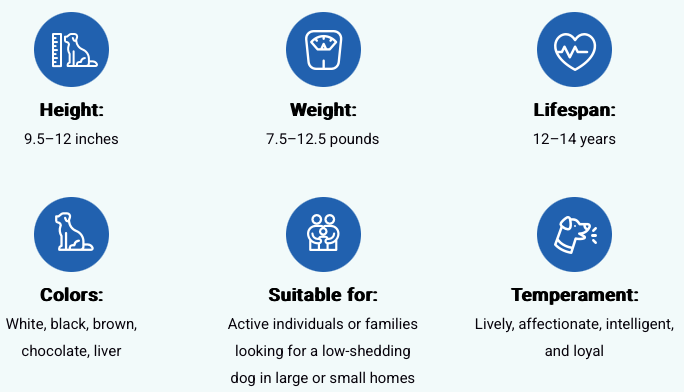 They were originally bred to hunt rats: Miniature Fox Terriers were developed in the 1800s in Australia to help control the rat population on farms. Their small size and agility made them perfect for the job.
Miniature Fox Terriers were originally bred in England in the 1800s to hunt small game, such as rats and rabbits. They were also used as vermin control on farms and in homes. The breed was developed by crossing various small terrier breeds, including the Toy Manchester Terrier, Chihuahua and Italian Greyhound. Miniature Fox Terriers were prized for their agility, speed and tenacity, making them excellent hunters and companions. Today, they are primarily kept as pets and are known for their playful and affectionate personalities. Miniature Fox Terriers are primarily kept as companion pets and family dogs. They are known for their lively and playful nature and they make great indoor pets due to their small size. They are also used as therapy dogs due to their friendly and affectionate temperament. While Miniature Fox Terriers were originally bred for hunting small game, they are not commonly used as working dogs today. However, some owners may train their Miniature Fox Terriers for activities such as agility, obedience and tracking. They may also be used for rodent control on farms or in rural areas. Overall, Miniature Fox Terriers are primarily kept as beloved pets and companions. Miniature Fox Terriers are not typically known for their guarding abilities. They are small and friendly dogs that are more likely to greet strangers with wagging tails than to act as protectors. While they may bark to alert their owners of a potential threat, they are not usually aggressive and may not be effective as guard dogs. However, they can make great watchdogs and companions. Miniature Fox Terriers are most popular in their country of origin, Australia. They are also popular in the United States, Canada and the United Kingdom. Miniature Fox Terriers are best suited to temperate climates with moderate temperatures. They can tolerate both hot and cold weather to some extent, but extreme temperatures can be challenging for them. They have a short coat that provides minimal insulation, so they may need extra protection in very cold weather. In hot weather, they are prone to heatstroke, so it is essential to keep them cool and hydrated. Overall, they are adaptable dogs and can adjust to different climates with proper care and attention. === It is difficult to determine the exact number of Miniature Fox Terriers in the world as there is no centralized database or registry for this breed. However, according to the American Kennel Club, the Miniature Fox Terrier is a relatively rare breed, ranking 173rd out of 195 breeds in popularity in the United States. It is estimated that there are several thousand Miniature Fox Terriers worldwide. === ==== Temperament and Intelligence ==== Miniature Fox Terriers were used for protecting human food supplies in the early days of the breed. Big things come in small packages! This is why these feisty canines could scare off most people and creatures who tried to enter food storage areas. The Miniature Fox Terrier has a lively and affectionate temperament, making them excellent for almost any dog owner. They are always ready to participate in any activity and are quite protective despite their small size. They are adaptable to various living arrangements and are intelligent and capable of learning a wide variety of tricks and commands. They are also good puzzle solvers, so you will need to be extra cautious when you want to prevent them from doing something, like getting into the cupboards or out of the yard. Your Miniature Fox Terrier is an active breed despite their small size, so they will need a good amount of exercise. You will need to aim for at least 30–60 minutes of high-energy activity each day, which can include daily walks, play sessions, and opportunities for running and exploring in a safe environment. They are easy to train and eager to learn, though, so you can teach them a wide variety of tricks and their friendly personality makes them fun to have around. ==== Social ==== The Miniature Fox Terrier is a great choice for any family. They are friendly and playful and often get along with children, especially those who are willing to spend time playing with them. They will want to take part in all of your family activities and will keep an alert and watchful eye over your home while you sleep. However, their high energy level will require plenty of exercise to keep them from becoming bored, which might lead to misbehaving, so ensure that you or another family member can spend plenty of time with them each day before you commit.Despite being hunting dogs, they usually get along surprisingly well with other dogs, especially if they spend time with other animals when they are still puppies. They can even get along with cats in certain cases, but they have a strong prey instinct for rodents and may chase after smaller cats, rabbits, mice, etc. ==== Grooming ==== Grooming your Miniature Fox Terrier is incredibly easy because their short coat only requires occasional brushing to remove loose fur and keep it shiny, along with an occasional bath with a high quality shampoo. However, you will need to regularly trim the nails, check their ears for signs of wax and infection, and brush their teeth with a dog-safe toothpaste to help keep them clean. ==== Life Expectation ==== Can get older than 20 years Mini foxies, as they are often known, have been raised in Australia (with different names) since the 19th century. These little, tenacious terriers descend from types of fox terrier raised in England and brought to Australia by the first settlers. The race evolved in the same direction as the American Toy Fox Terrier. As far as we know, the little plain fox terrier crossed with terriers from Manchester (Gentlemen's Terriers). The smaller puppies of these litters were reared later and crossed with other small breeds such as the English Toy Terrier, the Whippet and the Italian Galgo. The breeders were looking for a light and fast dog that would maintain the characteristics of Fox Terrier and, at the same time, hunt smaller pests, such as rabbits and rodents. The Fox Terrier is an Australian race that has been bred for generations. His appearance is unique.
The Fox Terrier miniature is a small, agile, soft-faced Terrier that preserves the hunting instincts and tenacity of its larger Terrier cousins. The race is similar to the Toy Fox Terrier and is colloquially known as “Mini Foxie” in his native Australia. The noble head of the Fox Terrier Miniature is characteristic, with erect ears that can remain upright or bend right at the tip. Another distinctive feature is its articulated and oval legs. The standard of the breed has always allowed the dog's tail to be amputated or amputated. Cases of natural kennels have been known. Only three color combinations are allowed: black and white, beige and white and tricolor (black, white and beige).
Loyal, curious, intrepid, active and adaptable, the Fox Terrier miniature have an almost dual personality: at the first sign of suspicion, danger or alarm, the pampered watchdog instantly transforms into fearless watchdog, tenaider hunter and fearless hunter. They are good with children who are old enough to distinguish between a dog and a teddy, and generally get along well with other domestic animals. However, like all terriers, the Mini Fox Terrier cannot distinguish between rodents or reptiles and vermins, and should not be left alone with these animals. Do not allow them to develop small dog syndrome. Don't treat them like little humans. Remember, they're canine animals. What they instinctively need like animals? If you don't socialize this dog and satisfy all its canine instincts, you can develop a mistrust of something new or different, which can cause excessive alarm barking. It's important to take the dog for a walk every day.
He usually has few health problems. The Mini Fox Terriers have a strong constitution and are long-serving. The breeders at the Mini Foxie Club of Australia select players against common genetic problems in small dogs.
These dogs are adaptable and can cope with life in the city or in the countryside. Its size allows them to adapt to small spaces. They remain popular as a safe family dog, and their low maintenance and ability to have fun if they are given toys make them an excellent choice for singles and elders.
The Mini Foxies get along better with at least moderate exercise. You have to walk them every day. When walking, the dog must go next to or behind the person wearing the leash, because in the mind of a dog, the leader marks the way, and that leader must be the human. In addition, they will enjoy playing with toys and “smart” games in the yard. They will enchant delighted their owners on more strenuous excursions and walks, even jogging behind a horse for short periods.
The Mini Fox Terriers have the short fur. They always show the natural. The toenails of their feet should be cut regularly. Pour en savoir plus sur le Miniature Fox Terrier Merci de visiter cette page https://www.milouchouchou.com/es/razas-de-perro-poco-conocidas/razas-raras/miniature-fox-terrier ===== Toy Fox Terrier =====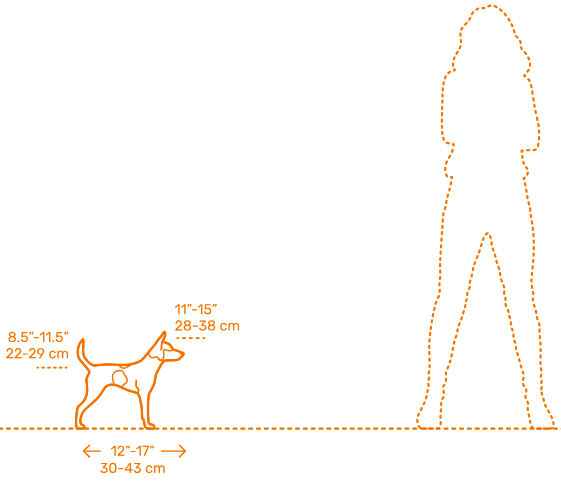
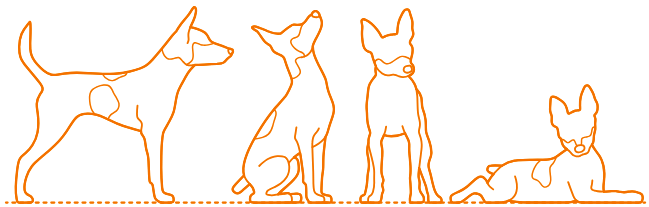 Because of its amusing toy-dog personality, appearance, intelligence, and behavior, admirers call it both a toy and a terrier. The Toy Fox Terrier’s large black eyes sparkling with eager intelligence is well-balanced with its small athletic appearance that comes with equal strength and stamina. The head is solid, tail shorter and set high, ears are v-shaped, coat predominantly white but may spot a black tan on the face, back, and rear of the body. Since the Toy Fox terrier is naturally well-groomed, alert, lovable, loyal, and proud, it makes a wonderful companion for senior citizens and those with disabilities. Toy Fox Terriers have a withers height of 8.5”-11.5” (22-29 cm) and a typical weight in the range of 4-7 lb (2-3 kg). The Toy Fox Terrier has an overall body length of roughly 12”-17” (30-43 cm), standing height between 11”-15” (28-38 cm), and a typical lifespan of 12-14 years**.


Zwergpinscher
Comparisons
